
What Type of Acne Do I Have? A Visual Guide


Acne does not always look the same. Some breakouts appear as tiny dark dots, while others form tender bumps or painful lumps deep beneath the skin. Learning to recognize the main types can help you understand what may be happening and choose safer next steps. However, photographs and descriptions cannot replace a professional diagnosis. Conditions such as folliculitis, rosacea, and perioral dermatitis can sometimes resemble acne, so persistent or unusual breakouts should be evaluated by a dermatologist.
How acne develops
Acne begins inside a hair follicle, commonly called a pore. Sebaceous glands connected to the follicles produce sebum, an oily substance that helps protect the skin. When excess oil combines with dead skin cells, it can form a plug inside the follicle. Bacteria that normally live on the skin may multiply within the blocked pore and contribute to inflammation.
This process can create different lesions depending on whether the pore remains open, closes, becomes inflamed, or develops inflammation deep inside the skin. Acne commonly appears on the face, forehead, chest, shoulders, and upper back because these areas contain many oil-producing glands. Hormonal changes, certain medications, family history, and oily products may influence breakouts, but acne is not caused simply by having dirty skin.
Blackheads
Blackheads are small, dark spots that usually look flat or slightly raised. Their medical name is open comedones. They form when oil and dead skin cells plug a follicle, but the opening of the pore remains exposed to the air.
The dark color is not trapped dirt. It develops when the material inside the pore reacts with oxygen and changes color. Aggressively scrubbing the skin will not remove the underlying blockage and may make irritation worse.
Blackheads often appear around the nose, chin, forehead, chest, or back. They are considered non-inflammatory acne because they generally do not look swollen or feel painful. However, squeezing them can damage the pore, introduce bacteria, and increase the possibility of inflammation or scarring.
Whiteheads
Whiteheads, also called closed comedones, appear as small white, cream-colored, or skin-colored bumps. Unlike blackheads, the opening of the blocked follicle is covered by a thin layer of skin. Because the contents are not exposed to air, the plug does not develop a dark color.
Whiteheads can feel firm and may be easier to feel than to see, especially when they are very small. They frequently occur in groups on the forehead, cheeks, chin, or along the hairline.
Trying to squeeze a whitehead can push inflammation deeper into the skin and damage the surrounding tissue. Picking may also increase the risk of lingering discoloration or acne scars. Dermatologists recommend treating the clogged pore rather than manually extracting it at home.
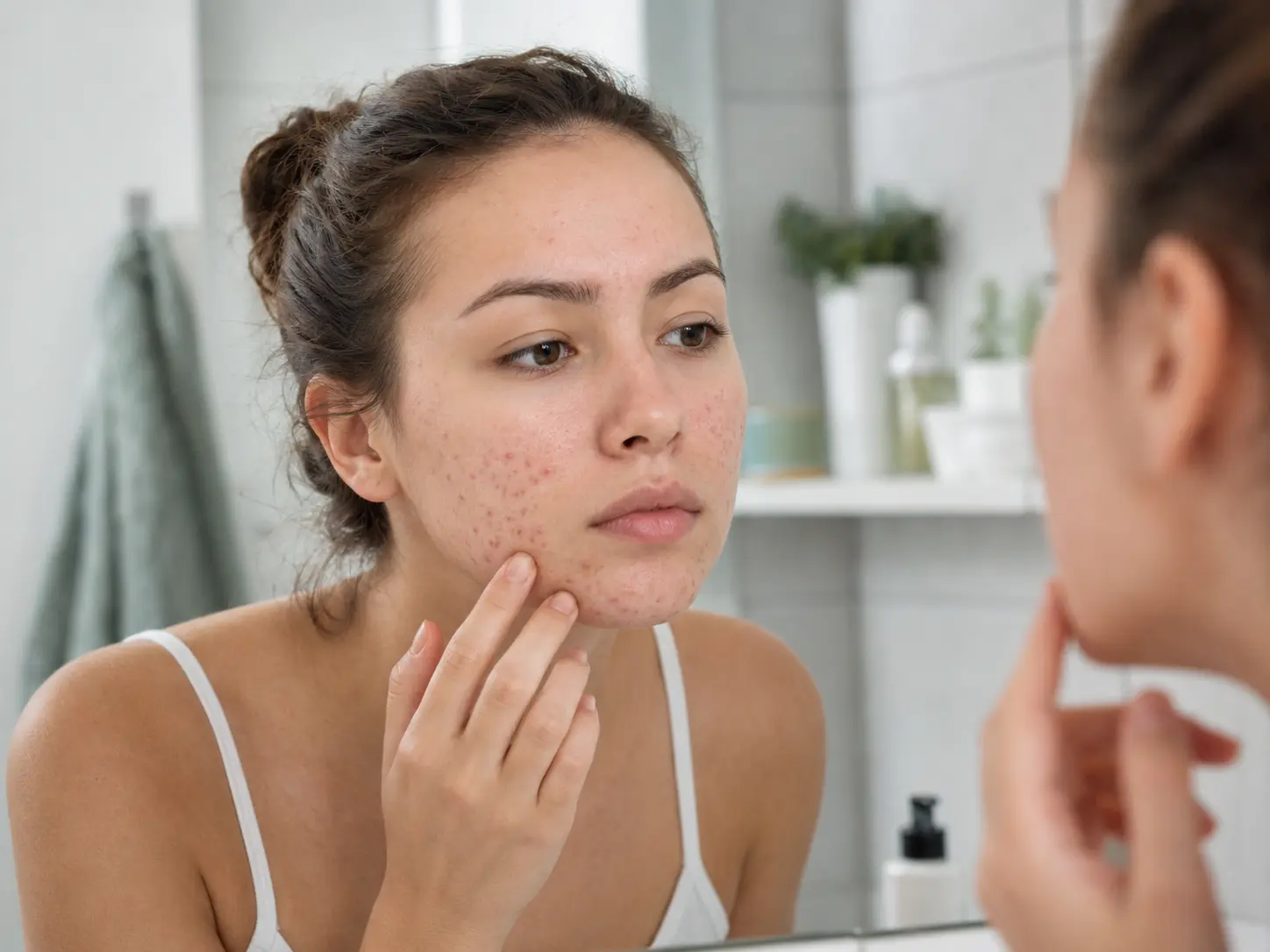
Papules
Papules are small, solid, inflamed bumps without a visible white or yellow center. They may appear pink, red, reddish-brown, purple, or darker than the surrounding skin, depending on the person’s natural skin tone. Papules may also feel sensitive or tender when touched.
These bumps develop when a blocked follicle becomes inflamed. A group of papules can create a rough texture that sometimes feels similar to sandpaper.
Papules are a form of inflammatory acne, meaning they require gentle care. Picking or squeezing a papule rarely releases anything because it does not contain a visible collection of pus. Instead, pressure can worsen swelling, damage the skin, and increase the risk of dark marks or permanent scarring.
Pustules
Pustules are what many people commonly call pimples. They resemble papules but contain visible pus, which creates a white or yellow center. The area around that center may appear inflamed, swollen, or tender.
The presence of pus does not mean that the skin is dirty. It is part of the body’s inflammatory response inside a blocked follicle. Pustules can occur anywhere acne develops, but they are especially common on the face, chest, shoulders, and upper back.
Popping a pustule may push its contents deeper or into nearby tissue. This can prolong the healing process and contribute to post-inflammatory marks or scars. A small surface pustule should not be confused with an acne cyst, which forms much deeper beneath the skin.
Nodules and cysts
Cysts are deep, painful lesions that contain pus and may feel softer than nodules.
Both types can remain for weeks and carry a greater risk of permanent scarring. They should never be squeezed, cut, punctured, or treated with harsh home remedies.
Over-the-counter products may not effectively control acne that develops this deeply. Early dermatological treatment is important because it can reduce pain, prevent additional lesions, and lower the possibility of lasting scars. A dermatologist may use prescription topical medications, oral treatments, or an injection to reduce a particularly painful lesion.
Why identifying the type matters
Different acne lesions involve different levels of pore blockage and inflammation. Blackheads and whiteheads are primarily clogged pores, while papules and pustules include inflammation. Nodules and cysts extend much deeper into the skin.
Correct identification can help prevent unsuitable treatment. For example, repeated scrubbing may worsen inflammatory acne, while treating only individual spots may not prevent new clogged pores from forming. It is also possible to experience several types simultaneously. Someone may have blackheads on the nose, whiteheads across the forehead, and pustules around the jawline.
Identification also matters because not every acne-like bump is acne. Itchy and similarly sized bumps, irritation concentrated around the mouth, or persistent facial redness could indicate another skin condition. When the pattern is uncertain, professional evaluation is safer than repeatedly testing new products.
 Nuevo
NuevoBest acne scar removal cream
✨🧴 Best acne scar removal creams, compare top options and find the right treatment for smoother, healthier-looking skin.
When professional treatment is recommended
Consider seeing a dermatologist if you have painful nodules or cysts, acne that is leaving scars, widespread inflammation, or breakouts that do not improve after consistent over-the-counter care. Professional treatment is also appropriate when acne causes embarrassment, anxiety, low self-esteem, or avoidance of social activities.
Seek medical advice sooner when a breakout appears suddenly after beginning a medication, becomes intensely itchy, spreads rapidly, or shows signs of infection. A dermatologist can confirm whether the condition is acne, evaluate its severity, and create a plan based on the types of lesions, skin sensitivity, medical history, and risk of scarring.
Visual comparison is a useful starting point, but it should not be treated as a final diagnosis. Important clues include the lesion’s depth, appearance, tenderness, and whether it contains visible pus. With deep, painful, persistent, or scarring acne, professional guidance offers the best chance of achieving clearer skin without unnecessary irritation or permanent marks.
Leave a Reply